

I recently came very close to getting suckered into buying the latest / greatest skincare product, before fact checking the ingredient profile and realizing it would do very little as a topical. Navigating great marketing is tricky, especially when you’re pulled to try products that are new and innovative.
For me, this experience started with PDRN and inspired this post. I added a few more ingredients I’ve been tracking and learning about, namely to understand the best way to get the skin boosting benefit.
PDRN
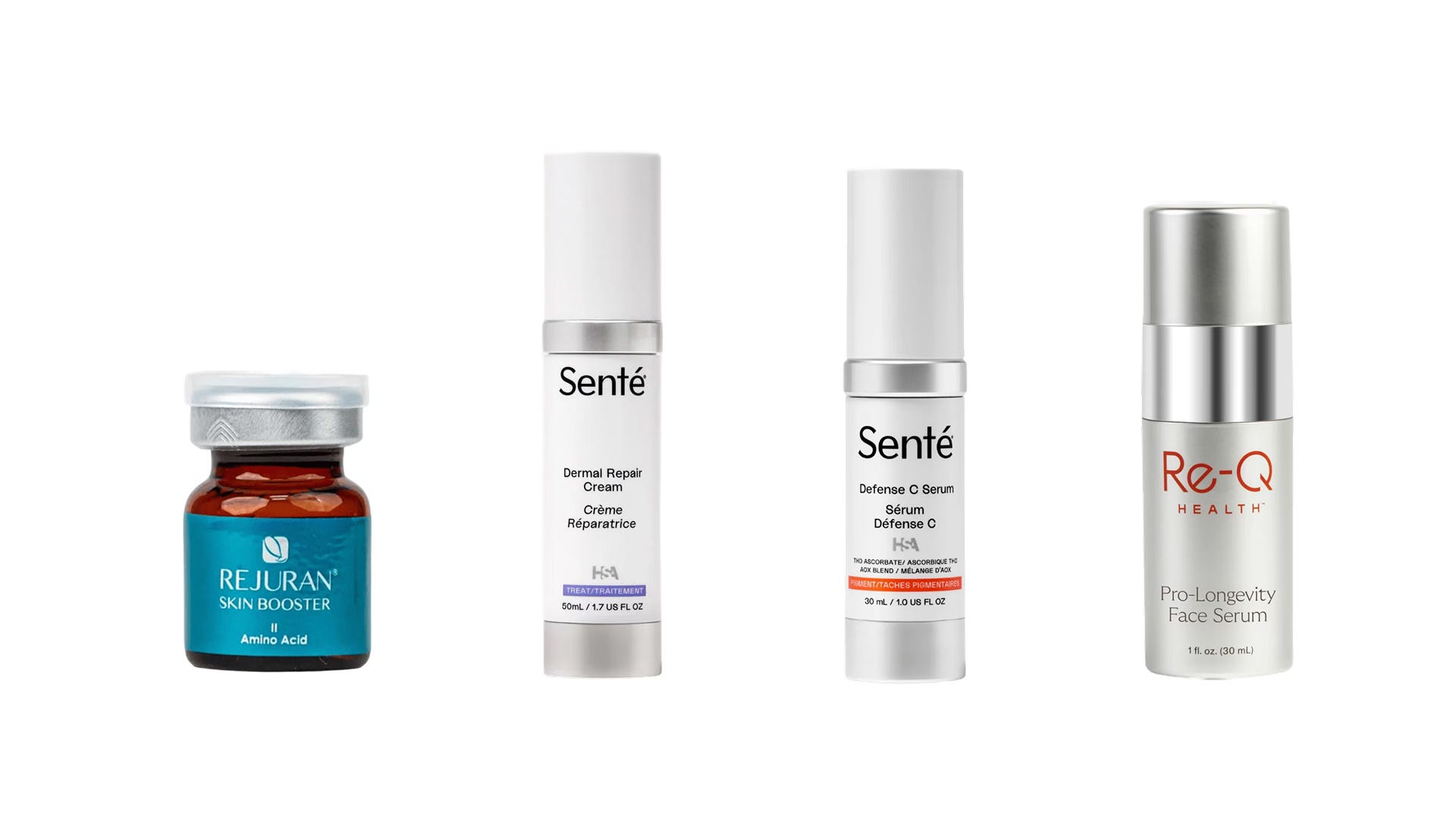
PDRN stands for polydeoxyribonucleotide (not important) and is often casually referred to as “salmon sperm”. It’s a mixture of salmon-derived DNA fragments used in aesthetics for skin regeneration (stimulates fibroblasts to produce collagen & elastin). It’s very popular in South Korea, launching over ten years ago as the main ingredient in the skin booster Rejuran. This is an injectable treatment (important).
PDRN grew in popularity globally, especially as Rejuran became available in other countries around 2023. As the interest swelled, many beauty companies started to incorporate PDRN into their products.
Why this is important: PDRN is a large molecule, and when applied topically, it can’t effectively penetrate the skin barrier. It will sit on top of the skin doing not-so-much. Instead, the two great options are to 1) get a microneedling treatment with a PDRN booster (this “opens” microchannels in the skin so the PDRN can work effectively) or 2) get a skin boosting injectable treatment like Rejuran (travel may be required). I plan to do the former, and in the meantime, am clearing PDRN topical products from my cart.
Heparan Sulfate Analog (HSA)
Speaking of molecule size, HSA is a great ingredient for deeper skin hydration due to its small size (especially vs. hyaluronic acid). This is the primary technology used by the medical-grade skincare brand Sente. Their Dermal Repair cream (a moisturizer) is my personal favorite, especially after non-ablative laser treatments and microneedling. The sample size is in the post-care kits at SkinSpirit (our medical director loves it).
Vitamin C
Vitamin C is widely used in skincare so this is not new. But Sente just launched a new hero product: their Defense C Serum, which also contains HSA. What matters in vitamin C land is 1) the stability of the molecule and 2) the packaging, also to protect that stability (it can oxidize when exposed to air, light or heat). This product uses THD Ascorbate, which is much more stable than pure L-asorbic acid, for example. Most medical-grade skincare brands have air-tight packaging, Sente included. I just got my sample in the mail.
ReQ (RLX-201)
ReQ is a new brand with a product that launches in 27 days (there’s a tracker on their site). It’s positioned as a longevity-focused skin serum, based on a proprietary molecule RLX-201. Their science is based on extending the functional window of fibroblast cells. This technology has the same target as other effective ingredients (like PDRN), but uses a different mechanism. The concept of “cellular longevity” is new in aesthetics. Their blog post on the future of skincare is a good, high-level read. I just received this product and will be testing it out. TBD if I am the target audience.
The ingredient audit continues — Pavise is on my radar next, in addition to my first PDRN microneedling treatment that I’m booked for in May.
Would love your thoughts on Dr Diamonds Metacine line!