

I always assumed I’d need a few decades to warm up to cosmetic surgery. I love the girls who go for it, but I am personally terrified of anesthesia. Post-my first baby, even getting on an airplane feels like an unacceptable level of risk. Then a routine Botox appointment and a few very open colleagues taught me something I didn’t expect: more Botox was about to make my actual problem worse. Surgery was the faster, more honest fix.
The problem was my right eyelid. My injector was the one who caught it — a worsening ptosis, which is the technical term for a droopy eyelid. I’d only ever heard of it as a side effect of badly placed neurotoxin. Mine had nothing to do with treatment (I’d taken a long break through pregnancy and postpartum anyways). It’s something that can develop over time, or even exist since birth. Once she pointed it out, I couldn’t stop noticing it: on Zooms, at night when I was tired, and especially in photos.
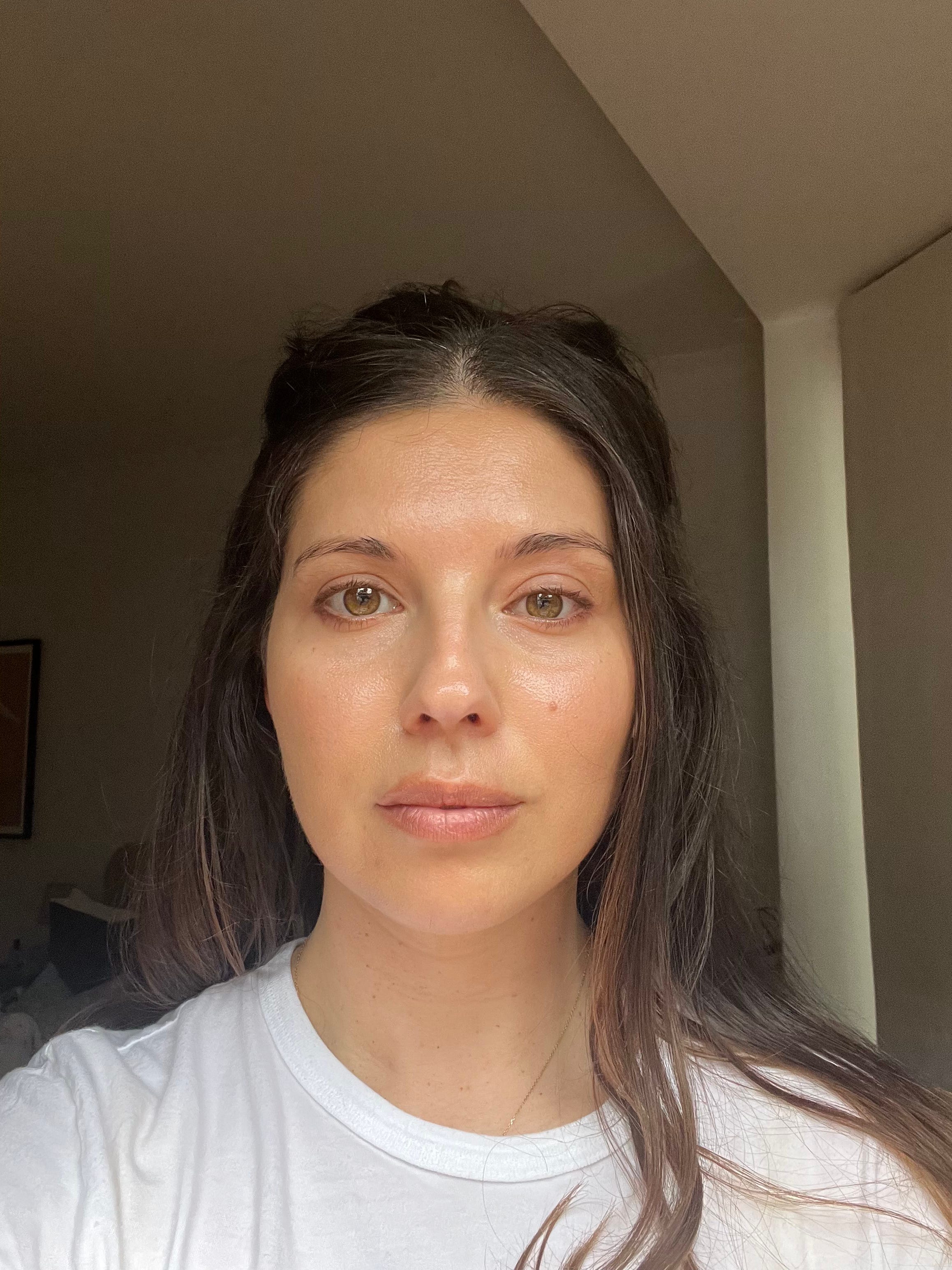
The non-surgical option was to keep using Botox to fake more symmetry — using the toxin to lift the brow on the droopy side. I called our medical director, a plastic surgeon, and he talked me out of it quickly: lift the brow while the lid stays low, and it just looks wonkier. There was also Upneeq, an eyedrop that temporarily opens the lid, but I didn’t love the idea of using a daily drop indefinitely. It’s also expensive!
He referred me to one of the other top injectors at SkinSpirit — someone who’d actually had a ptosis repair herself. She’d already done the legwork of finding a surgeon who does a lot of them, which was very helpful since it’s a more niche procedure than the bleph. That’s how I found Dr. Eliasieh, an oculoplastic surgeon who founded his own practice, Lunata Eyelid and Cosmetic Surgery, in the East Bay.
The consult went deeper into my history than I expected. He measured the ptosis — 1.5mm — and then needed to figure out if it was congenital or not, since that determines his surgical approach. Which is how I ended up at home digging through boxes for baby photos:
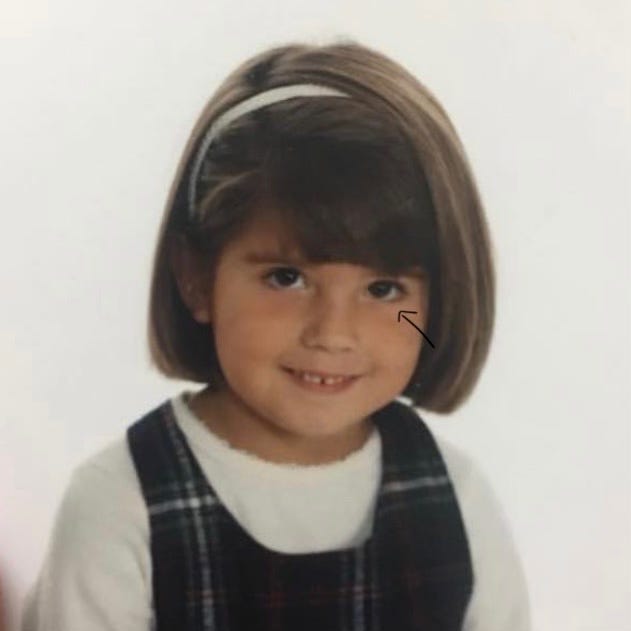
Turns out, my ptosis was not congenital. I sat with the medication plan, the risks, the possible outcomes. But the call I actually made first wasn’t to the surgeon’s office to book anything — it was to my mom.
Making the decision and all things treatment next time <3