

The best thing I do for my skin doesn’t come in a bottle. There’s no satisfying scent or instant dew. For about 48 hours afterward, I look worse.
My face leaves the clinic red and tight, like a mild sunburn that hasn’t decided what it wants to be yet. By the next morning it’s lighter — but still the kind of face that makes people ask if you’re okay. By day three, the redness is gone and some mild peeling replaces it. And then, over the next few weeks, my skin gets firmer and more elastic. The texture evens out and the glow builds.
I’ve been doing this since I was 28. A provider introduced me to it — and to something she calls the pinch test. Pinch the skin on your cheek and watch how fast it snaps back. Do it before a treatment and then do it two weeks after. You’ll feel the difference before you see it. I work in medical aesthetics, and microneedling is the one treatment that nobody second guesses (and it’s the fastest growing category in aesthetics for that reason).
What it is
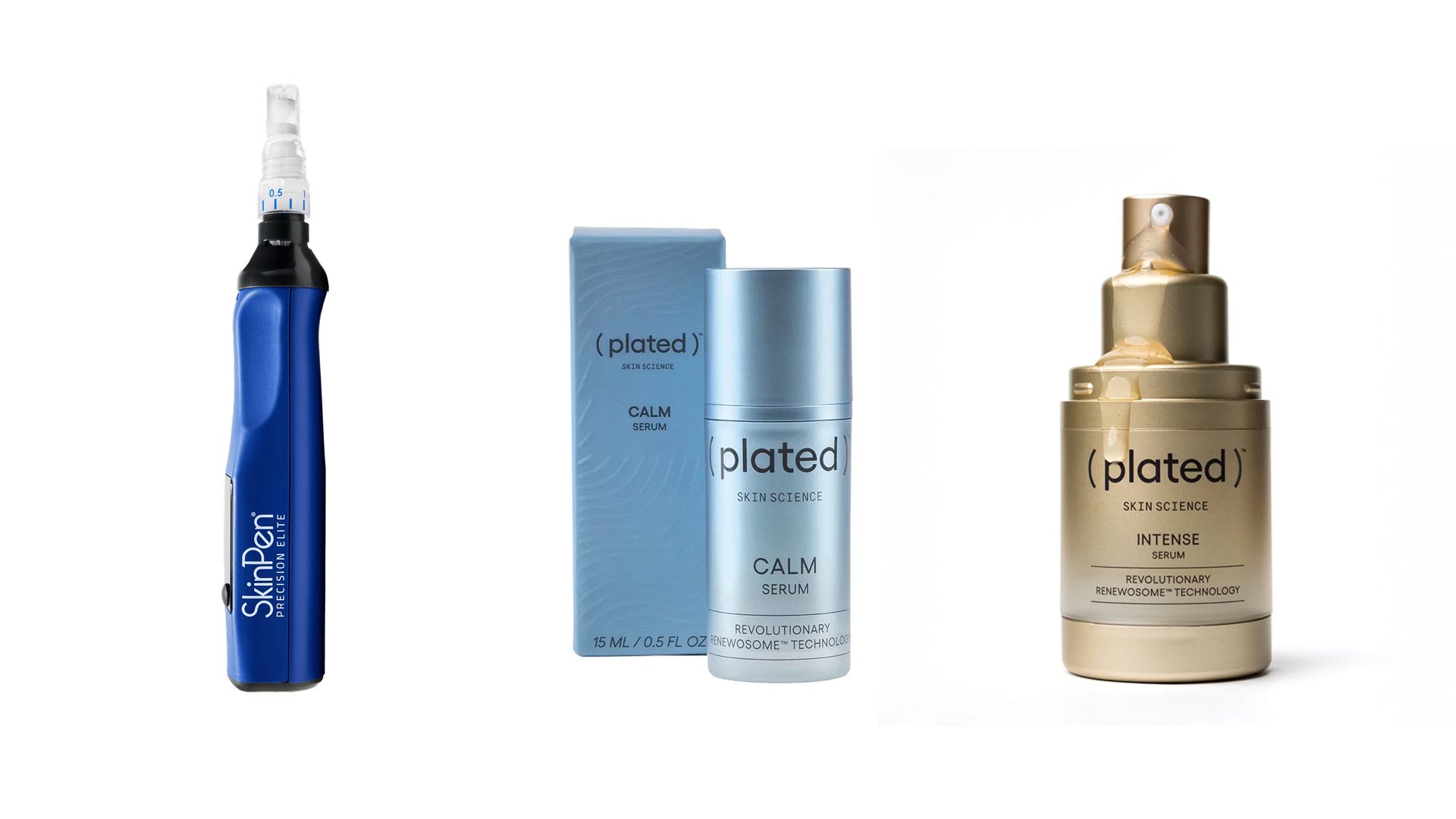
The microneedling device (commonly, the SkinPen) creates microinjuries that trigger the skin’s wound-healing response. Collagen and elastin flood in to repair that damage, by design. It’s often done proactively to help reverse the natural collagen loss that happens over time. Collagen density peaks in your early twenties and drops every year after that — silently, without warning, until one day the light in your bathroom starts to hit different.
The discomfort is real but manageable. You’ll get topical numbing beforehand (typically 30 minutes, but I’ve had providers squeeze in 15 more for the extra comfort). By the time treatment starts, the sensation lands at a 3 out of 10 on the pain scale — pressure more than pain, with occasional sharper moments depending on where they’re working. Areas like the undereye tend to have a stronger bite.
My routine
For years I went twice a year — my birthday and half-birthday. Simple, memorable, hard to talk myself out of. Starting this year I’m going quarterly, which is what most of the providers I work with do for themselves (and I am often the first to copycat).
Here’s how to make it your own –
Exosomes. This serum is microneedled into the skin during the treatment, and can also be applied topically after (SkinSpirit uses the Plated Calm product). Using it during or immediately after treatment allows the product to penetrate deeply into the skin while microchannels are most open. This helps accelerate healing and cut down on redness significantly. It’s my personal favorite and worth the upcharge everytime. Fair warning: the topical application post-treatment can really sting. Luckily you’re still mostly numb at that point, keeping the discomfort at a 4 out of 10.
Growth factors are a more widely-available version of a regenerative add-on like exosomes. They are similar but different: exosomes contain growth factors (and more), whereas a growth factor product is more or less the single active. The cult-favorite at-home product in aesthetics - SkinMedica’s TNS - is growth-factor based, so these are tried and true.
If you have acne, standard microneedling is typically contraindicated — meaning most providers should not do it on active breakouts. But ask about microneedling with the Clear & Brilliant Catalyst Serum. It’s a new CBD-based serum that helps tame inflammation and calm active acne. It just won a Cosmopolitan Acne Award. I’ve seen what it does for patients who thought they’d been ruled out of this treatment – the before-and-afters are startling.
If you’re treating scarring, a single session won’t move the needle too much. Plan for a series — three treatments spaced four to six weeks apart for real correction. Or step up to radiofrequency microneedling, like Morpheus8, which drives deeper remodeling. That’s a different category of treatment and a different price point, but if scarring is your primary concern, it’s the best bet.
Don’t neglect the neck
Microneedling is often booked for the face only, but I always add the neck.
The skin on your neck is significantly thinner than other areas (I’ve read up to 40% - TBC), so it’s often the first place people notice crepiness. There are also significantly fewer treatment modalities available for the neck. To avoid a big contrast in skin quality after the jawline, I always book face, neck, and chest and drag my products down the neck everyday. Yes, even despite Plated’s infamous cost per pump (per Nikki Glaser at the Globes…)
Microneedling results do send me into hiding for 48-hours. But two to three weeks out, when the collagen response is in full swing, it’s the closest thing I’ve found to actually changing the quality of the skin — not just its surface.